The Ultimate Keto Diet Plan for Beginners: Lose Weight, Crush Cravings, and Burn Fat Effortlessly

You have probably heard about the low-carb, high-fat lifestyle that is so popular among actors, models, and everyday people alike—and with good reason. Low-carb diets offer proper nourishment with whole foods while keeping your body effortlessly burning fat for fuel. This is a great way to live, as it makes sustainable fat loss largely effortless! But where does this mysterious word “ketogenic” actually fit into the picture?
“Ketogenic” comes from the word “ketosis”, which is a unique metabolic state in which your body breaks down fat molecules into ketones to provide clean, efficient energy. This state is achieved through a very high reduction in carbohydrate intake paired with a higher-than-normal healthy fat intake.
The normal state of the body’s metabolism is called “glycolysis”, where carbs are burned for energy. The long and short of it is that when your body is in carb-burning mode, it will use all available carbohydrates for energy before it ever touches your stored fat reserves. When you enter ketosis, however, your body is primed to burn fat directly—and that is fantastic news for anyone trying to get lean, trim, and healthy.
Why Choose Keto? The Incredible Benefits of Ketosis
By cutting carb intake significantly, we can drastically reduce insulin resistance, which is the primary precursor to type 2 diabetes. In addition, low-carb diets, when paired with regular movement, can be remarkably effective at helping alleviate the symptoms and progression of type 2 diabetes.
Beyond that, ketosis itself is naturally appetite-suppressing. This means your hunger will naturally check itself, increasing your caloric deficit without making you feel starved, and helping you lose fat even faster.
The Miracle of Body Recomposition
The greatest part of a ketogenic diet is the fact that it actively spares muscle loss, whereas a standard high-carb diet doesn’t. Weight lost in a high-carb, calorie-restricted diet will often come from a frustrating combination of both muscle tissue and fat. With keto, however, you can burn pure fat without sacrificing your hard-earned muscle. This process is referred to often as “body recomposition” and leaves you with a much more preferred, toned physique after weight loss.
Furthermore, once your body adapts, you experience incredible mental clarity. Without the rollercoaster of blood sugar spikes and crashes, your brain runs smoothly on clean-burning ketones, completely eliminating afternoon brain fog and fatigue.
Getting Started: What to Expect in the First Two Weeks
Ketosis takes some time to trigger—about two weeks of dedicated low-carb eating is required for your initial metabolic adaptation. During this transitional time, you might experience bouts of sluggishness, fatigue, headaches, and some mild gastrointestinal shifts as your body adapts, which is often referred to as the “keto flu”.
Proper electrolyte intake and plenty of water will correct most of these issues immediately. In addition, the strict “diet” aspect of this ketogenic meal plan—that is, tracking every single calorie—should not be worried about right away.
The Water Weight Drop
Weight loss will come naturally as your body regulates its appetite and your addiction to sugar and processed food lessens. Therefore, aggressively restricting calories during the initial two weeks is not recommended.
It is also worth pointing out that ketogenic diets often create a significant loss of water during the first phase. This happens because carbs are converted to glycogen in your body, which is stored alongside water within your muscles and liver. As you deplete those stored carbs, your body flushes that water out. While this rapid drop is partly water weight, it is a huge psychological boost that slashes bloating and allows your clothes to fit better right from the start!
Keto Food Guide: What to Eat & What to Avoid
To make your journey smooth and successful, you need to know exactly what to stock in your kitchen.
Foods Recommended on a Ketogenic Diet
- Meat: Beef, goat, lamb, turkey, pork, veal, and chicken.
- Fish & Seafood: Salmon, trout, catfish, sardines, tuna, haddock, and many others.
- Fruits: Strawberries, blueberries, raspberries, and avocado.
- Vegetables: Broccoli, asparagus, Brussels sprouts, cucumbers, spinach, kale, and other leafy greens.
- Nuts and Seeds: Almonds, walnuts, sunflower seeds, pumpkin seeds, and sesame seeds.
- Dairy Products: Cheese, Greek yogurt, sour cream, and heavy cream.
- Fats and Oils: Butter, extra virgin olive oil, coconut oil, almond butter, flaxseed oil, sesame oil, and MCT oil.
Foods to Avoid on a Ketogenic Diet
- Grains: Wheat, oats, corn, barley, rye, bread, pasta, and rice.
- Artificial Sweeteners: Sucralose, Equal, Acesulfame, Splenda, Saccharin, and similar chemical sugar substitutes.
- Processed Foods: If it contains carrageenan, chemical preservatives, or hidden fillers, skip it.
- “Low-Fat” Products: Diet sodas, low-fat packaged foods, commercial gluten-free diet snacks, and Atkins products that rely on processed fillers.
My Real Story: How I Lost 45 Pounds in 4 Months
I am by no means a clinical medical expert. I am now 46 years old and I spent my entire life trying to lose weight. Ironically, I also spent years learning about nutrition and exercise. Figuring out macronutrients just comes naturally to me now because I have done it so much throughout my life. However, by following a strict keto diet, this was the very first time I saw any real, lasting success in losing unwanted pounds—despite years of working out and being active.
I have had a very successful go of it so far, and I feel that a lot of you who are trying to get started with a ketogenic diet may get overwhelmed and confused with all of the numbers and information coming at you. Hence, this streamlined ketogenic diet meal plan. It is what I do to keep things simple. I am a guy; I need simple solutions!
For me, success with a keto diet is found by establishing base meals and adding variety later on if needed. Honestly, I eat pretty much the exact same thing every single day. It might not sound exciting, but losing 45 pounds in 4 months is exciting, so I am sticking with it. If it isn’t broken, don’t fix it!
The 7-Day Keto Grocery List
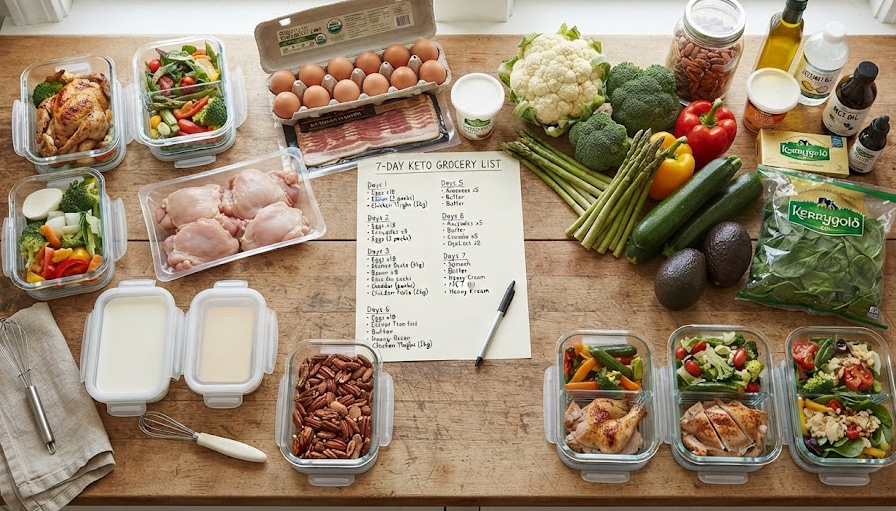
To keep your first week completely foolproof, our daily meals will consist of bacon and eggs, chicken with vegetables, and beef with vegetables. These are foundational base meals that provide wonderful macros for most people. For those who need more food and higher fat intake, you can easily add a keto-friendly snack or two to get your macros right where they need to be.
Here is your exact shopping list for the week:
- Proteins & Dairy: A dozen eggs, a package of bacon, real butter, and a pack of boneless, skin-on chicken thighs.
- Produce: 1 onion, 1 bell pepper (green, red, or yellow—your choice), and two bulbs of garlic (optional, but very heart-healthy).
- Vegetables: A big bag of mixed frozen vegetables (at least 12 cups worth, or plain frozen broccoli if you prefer).
- Pantry Items: A bag of almonds and a jar of almond butter.
- Beef: A package of beef that you can easily imagine cutting and dividing into 6 equal portions of about 5.5 ounces each (a bit bigger than a deck of cards).
Step-by-Step Meal Prep Guide
I am not much for cooking, but I am doing better every day. A ketogenic diet meal plan works much better when you have food ready to go in your fridge. It takes all the daily guesswork out of eating, and we need to keep things as simple as possible to achieve long-term success.
- Roast the Chicken: Put the 12 chicken thighs into the oven with all the cloves from a bulb of garlic. Separate the cloves, but you do not need to skin them; the intense heat from the oven will do that nicely, and you can easily peel them when you eat.
- Boil the Eggs: While the chicken thighs are roasting, hard-boil your eggs, then set them aside to cool completely.
- Fry the Bacon: Take a skillet, put some real butter in it, and fry up your bacon until crispy. (Note: Some might argue butter isn’t needed, but in my experience, you need to grease the pan, or your first strips of bacon will stick and burn!)
- Prep the Aromatics: Dice up half of your onion, and save the other half for next week. Cut up your bell pepper into manageable pieces.
- Sauté and Brown: In your skillet—I love to use the leftover bacon grease as a flavorful base—sauté the diced pepper, half-onion, and another full bulb’s worth of garlic cloves (leave the skins on just like before). Add your beef to the skillet and brown it thoroughly.
- Assemble the Containers: Wash and rinse out 12 meal-prep containers.
- In 6 containers, put 2 chicken thighs each, share the roasted garlic between them, and evenly divide the savory fat juices.
- In the other 6 containers, evenly spoon out your cooked beef, pepper, and onion mix.
- Take your frozen veggie blend and evenly pour it across all 12 containers right on top of the meat.
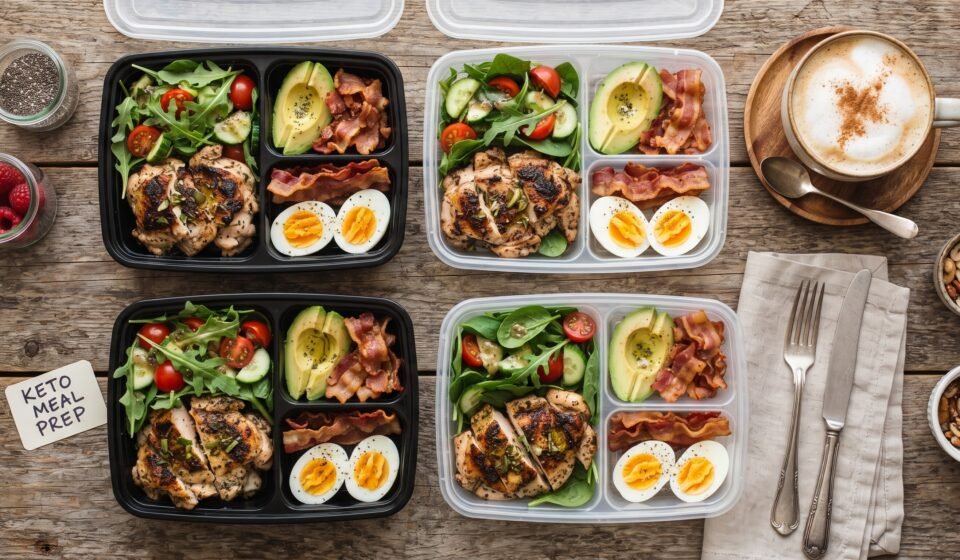
- Store and Pack: Put all the containers in your fridge. If you have minimal fridge space, keep a few out and store the rest in your freezer, pulling them out as needed. Take 6 small plastic snack bags and put 2 hard-boiled eggs and a divided portion of your cooked bacon in each. Now your meals are ready to grab, brown-bag, and take to work!
The Macronutrients of the Ketogenic Menu Plan
Right now, you have 6 full days’ worth of perfectly prepped meals waiting in your fridge:
- 6 bags containing 2 hard-boiled eggs and bacon
- 6 containers of chicken thighs and vegetables
- 6 containers of beef and vegetables
(For day 7, you can make an extra batch or get creative and plan your own custom keto recipes if you are feeling brave!)
For this foundational ketogenic meal plan, we target the following daily macronutrient profile:
- Total Calories: ~1,570 kcal per day
- Net Carbs: ~20g per day
- Protein: ~80g per day
- Fat: ~130g per day
When you divide each of those totals by 3 for three meals a day, you get approximately 7g of net carbs, 26g of protein, and 44g of fat per meal.
Important Adjustment Note: If you find that the protein in each meal feels a bit too high and the fat is too low, simply reduce the amount of meat in each meal by about half, and add 1 to 2 tablespoons of olive oil, butter, or cheese to each meal!
Personally, I need more protein and fat each day, and so will some of you. To bridge the gap, I add in extra snacks like cheese, almonds, or keto treats during the day to get my macros up where they need to be. I also drink a daily homemade Bulletproof Coffee, which consists of:
- 1 cup of freshly brewed hot coffee
- 1 tbsp coconut oil
- 1 tsp real butter
- 1 tbsp full-fat canned coconut milk
This simple coffee routine adds about 25g of high-quality fat straight to my morning. If you get hungry between breakfast and lunch while adjusting to work, remember: eat more healthy fat! You can also boost your meals by adding heavy cream, butter, coconut oil, or MCT oil to your coffee, putting a tablespoon of mayonnaise on your chicken while baking, or topping your veggies with cheese before reheating.
Salt, Electrolytes, and Hydration on Keto
It is also worth pointing out that you should consider taking a multivitamin with this meal plan, as unsupplemented low-carb diets can sometimes run low on vitamins B1, D, E, and K, as well as minerals like calcium, magnesium, and potassium. More importantly, you must actively manage your electrolytes as part of your keto strategy.
Do not omit essential electrolytes: Sodium, chloride, potassium, magnesium, calcium, and phosphate. A lack of electrolytes—most notably the body’s primary electrolyte, sodium (salt)—is directly responsible for lethargy, brain fog, and nasty keto flu symptoms on high-fat diets.
You should also be aiming for at least 8 to 10 cups of water a day. I personally carry a 600ml bottle and empty it at least 10 times a day. That is a lot of water, and yes, you will be going to the bathroom frequently. Carbs naturally hold water in the body, so with minimal carbohydrates, your system speeds up the flushing of retained water. Expect extra bathroom breaks, but enjoy the rapid reduction in puffiness and bloating!
How to Track Your Food Like a Pro
The absolute easiest way to track your eating and manage your macros for your ketogenic diet meal plan is to set up a free account with MyFitnessPal.
This app is available both web-based and as a mobile app for your phone. I cannot stress the importance of tracking what you eat enough; doing this has made all the difference in the world for my own progress and is a massive pillar of keto diet success.
Once you get your account set up, you simply enter the food you eat, and the app automatically calculates your total consumption for each macro and your overall calorie count. It even features a built-in barcode scanner that lets you scan food items instantly. It is absolute genius!
Summary and Final Encouragement
I am living proof that a ketogenic diet works. I also know firsthand that it can feel confusing as hell trying to deal with numbers, macros, and meal prep. My sincere hope is that this comprehensive, step-by-step 7-day ketogenic diet meal plan helps you stay calm, organized, and laser-focused on your ultimate fat loss goals. Stick to the basics, keep your kitchen prepped, manage your electrolytes, and watch the transformation unfold!