
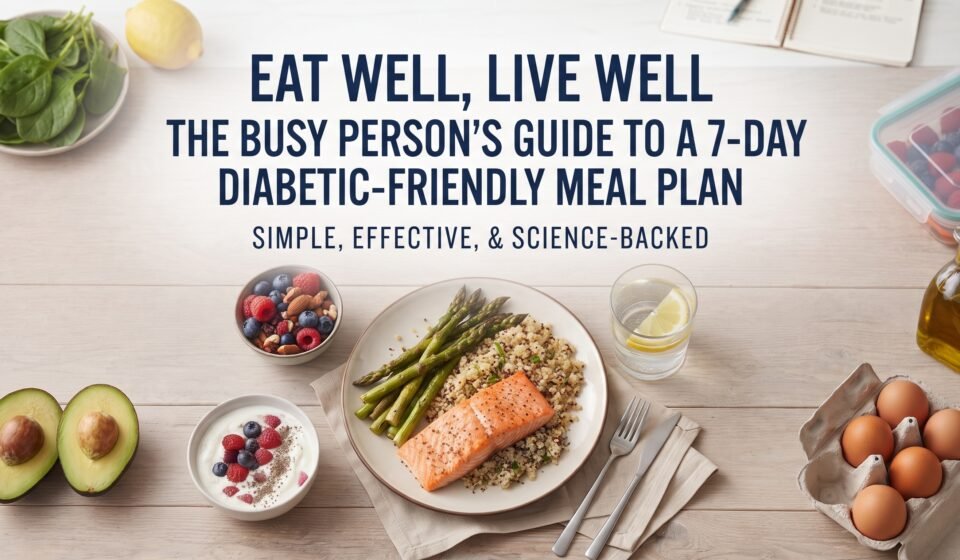
Eat Well, Live Well: The 7-Day Diabetic Meal Plan That Actually Fits Your Schedule

Let’s be real—eating well while managing your daily routine can feel exhausting. Between back-to-back meetings, household chores, and the endless mental drain of deciding what on earth to cook next, it’s easy to throw in the towel and default to whatever is quick and convenient. If you are managing diabetes or pre-diabetes, that cycle can feel even more stressful.
The good news? A balanced, diabetic-friendly meal plan doesn’t have to be complicated, boring, or a part-time job in the kitchen.
You don’t need to spend hours meal-prepping on a Sunday, and you certainly don’t need to eat dry chicken breasts and plain steamed broccoli every single day. This comprehensive guide and 7-day meal plan are built for real life. We are focusing on high-protein options, rich fiber, healthy fats, and smart carbohydrate choices that keep your blood glucose stable, your energy soaring, and your tastebuds genuinely happy.
Why This Diabetic-Friendly Meal Plan Actually Works for Real Life
Most diet plans fail because they are too restrictive, too time-consuming, or completely unrealistic for a busy schedule. This plan is designed differently:
- Built for Stability: Each meal strategically combines lean protein, fiber-rich vegetables, healthy fats, and sensible portions of carbohydrates to prevent sharp blood sugar spikes and crashes.
- Protein-Rich & Deeply Satisfying: Utilizing powerhouse ingredients like eggs, poultry, fish, Greek yogurt, cottage cheese, tofu, and legumes ensures you stay full for hours.
- No Bland Food Allowed: We lean heavily on fresh herbs, spices, zesty dressings, and comforting textures so you never feel like you’re “dieting.”
- Low in Refined Carbohydrates: The plan naturally minimizes heavily processed sugars and refined flours, swapping them for nutrient-dense, high-fiber alternatives.
- Batch & Busy-Friendly: Think quick sheet-pan dinners, effortless bowls, refreshing salads, and grab-and-go snacks that fit seamlessly into a hectic lifestyle.
The Complete 7-Day Diabetic-Friendly Meal Plan
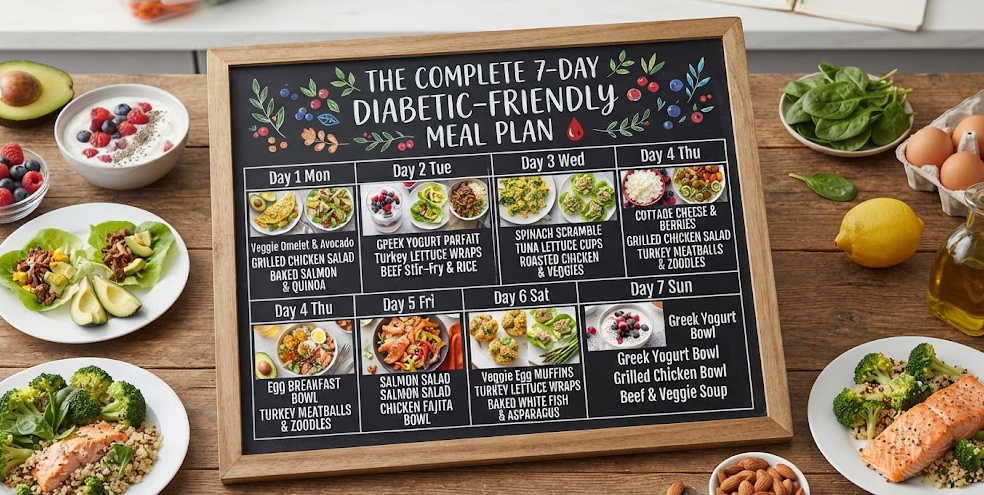
This week-long blueprint balances variety with ease. Feel free to mix, match, and repeat your favorite combinations to fit your routine.
Day 1
- Breakfast: Fluffy Vegetable Omelet loaded with spinach, mushrooms, and diced bell peppers, topped with sliced avocado and a side of fresh mixed berries.
- Lunch: Grilled Chicken & Greens Salad featuring crisp leafy greens, crunchy cucumbers, juicy cherry tomatoes, and a bright lemon-herb olive oil vinaigrette.
- Snack: Creamy Chia Seed Bowl: Plain Greek yogurt mixed with a tablespoon of chia seeds and a dash of cinnamon.
- Dinner: Baked Lemon-Herb Salmon served alongside a generous portion of roasted garlic broccoli and a small, sensible serving of fluffy quinoa.
Day 2
- Breakfast: Berry & Nut Yogurt Parfait: Plain Greek yogurt layered with fresh strawberries, chia seeds, and a small handful of chopped walnuts or almonds.
- Lunch: Turkey & Veggie Lettuce Wraps: Lean ground turkey sautéed with garlic and low-sodium soy sauce, served in crisp romaine lettuce boats with sliced avocado.
- Snack: Savory Cottage Cheese Cup: A serving of low-fat cottage cheese tossed with crisp cucumber slices and cracked black pepper.
- Dinner: Sizzling Lean Beef Stir-Fry: Lean beef strips tossed with snap peas, bell peppers, and broccoli in a ginger-tamari sauce, served over a modest portion of brown rice.
Day 3
- Breakfast: Hearty Spinach & Mushroom Scramble: Whole eggs scrambled with fresh baby spinach, earthy mushrooms, and ripe tomatoes.
- Lunch: Zesty Tuna Salad Lettuce Cups: Flaked wild-caught tuna mixed with a touch of Greek yogurt, Dijon mustard, and celery, served in crunchy lettuce cups with side mixed veggies.
- Snack: The Power Handful: A small palm-sized portion of raw almonds paired with a handful of fresh blueberries.
- Dinner: Herb-Roasted Chicken Thighs accompanied by roasted cauliflower florets, steamed green beans, and a small roasted sweet potato wedge.
Day 4
- Breakfast: Cinnamon-Walnut Cottage Cheese Bowl: Creamy cottage cheese topped with fresh raspberries, a sprinkle of cinnamon, and chopped walnuts.
- Lunch: Avocado Chicken Power Salad: Sliced grilled chicken breast over a bed of mixed greens, cucumbers, and pumpkin seeds with an olive oil dressing.
- Snack: Classic Protein Duo: One hard-boiled egg paired with crisp cucumber slices and a dash of everything-bagel seasoning.
- Dinner: Zucchini Noodle Turkey Meatballs: Homemade lean turkey meatballs resting on a bed of fresh zucchini noodles (zoodles) drenched in a rich, zero-added-sugar marinara sauce.
Day 5
- Breakfast: Morning Protein Bowl: Scrambled eggs layered over roasted vegetables, black beans, and fresh avocado slices.
- Lunch: Vibrant Salmon Salad: Flaked leftover baked salmon tossed with leafy greens, bell peppers, cucumber chunks, and crunchy pumpkin seeds.
- Snack: Simple Greek Yogurt Cup: Plain Greek yogurt stirred with a spoonful of fresh raspberries.
- Dinner: Sheet-Pan Chicken Fajita Bowl: Sliced chicken breast, colorful bell peppers, and red onions roasted together, served over shredded lettuce, avocado, and a modest scoop of black beans.
Day 6
- Breakfast: Cheesy Vegetable Egg Muffins: Baked mini-frittatas made with eggs, chopped bell peppers, spinach, and a spoonful of cottage cheese (great for batch-cooking!).
- Lunch: Mediterranean Turkey Wraps: Sliced turkey breast wrapped in large crisp lettuce leaves with crunchy carrots, cucumbers, and a generous smear of traditional hummus.
- Snack: Crisp Apple & Nut Butter: Sliced crisp apple paired with a small, measured portion of natural peanut butter or almond butter.
- Dinner: Baked White Fish (Cod or Haddock) served with roasted asparagus, cauliflower mash, and a side of quinoa.
Day 7
- Breakfast: Weekend Greek Yogurt Bowl: A rich bowl of plain Greek yogurt topped with blackberries, chia seeds, and crushed walnuts.
- Lunch: Balanced Chicken & Veggie Bowl: Shredded chicken, steamed broccoli, and roasted zucchini served over a base of leafy greens with an avocado-lime drizzle.
- Snack: Cinnamon Berry Cottage Cheese: Cottage cheese dusted with cinnamon and topped with a few fresh strawberries.
- Dinner: Comforting Lean Beef & Vegetable Soup: A hearty, broth-based soup packed with lean beef chunks, celery, carrots, cabbage, and green beans, served with a side garden salad.
(Looking for a sweet treat alternative? Try whipping up a batch of chia pudding made without added sugar, combining chia seeds with unsweetened almond milk and a touch of vanilla extract for an effortless make-ahead dessert!)
What Actually Makes a Meal “Diabetic-Friendly”?
Managing diabetes through food isn’t about restriction; it’s about intelligent chemistry and balance. The goal is to minimize sharp post-meal blood glucose spikes while maximizing sustained energy, cellular repair, and daily satisfaction.
Instead of cutting out carbs entirely, focus on the Plate Method:
- Fill Half Your Plate with fiber-rich, non-starchy vegetables (think leafy greens, broccoli, zucchini, and cauliflower).
- Dedicate a Quarter of Your Plate to high-quality, lean protein sources (chicken, fish, eggs, tofu).
- Reserve the Final Quarter for nutrient-dense, high-fiber carbohydrates (like quinoa, sweet potatoes, beans, lentils, or berries).
- Incorporate Healthy Fats (like avocado, olive oil, and nuts) to slow down digestion, enhance flavor, and promote long-lasting satiety.
7 Strategies to Make This Meal Plan Work for a Busy Lifestyle
When your schedule is packed, the best meal plan is the one that requires the least amount of friction. Implement these habits to stay on track without losing your mind:
1. Plan Your Proteins First
Before you even think about sides or complex recipes, lock in your primary protein sources for the week. Having pre-cooked chicken breast, hard-boiled eggs, canned tuna, or baked salmon ready in the fridge cuts down decision fatigue instantly.
2. Pre-Chop and Prep Vegetables
The moment you bring groceries home, wash and chop staples like bell peppers, cucumbers, broccoli florets, and celery. Storing them in clear containers means you can throw together a salad or stir-fry in minutes on a hectic weeknight.
3. Choose Smart Carbohydrate Portions
Carbohydrates are not the enemy, but quality and quantity matter. Prioritize minimally processed sources like lentils, black beans, wild rice, berries, and root vegetables that deliver a heavy dose of fiber alongside their energy.
4. Keep Grab-and-Go Snacks Handy
When hunger strikes during a busy workday, you are most vulnerable to reaching for processed, high-carb convenience snacks. Keep hard-boiled eggs, single-serving Greek yogurts, raw nuts, and pre-cut vegetable sticks with hummus front and center in your fridge.
5. Embrace Sheet-Pan and One-Pot Cooking
Less cleanup equals more compliance. Sheet-pan dinners (where proteins and vegetables roast together on a single pan with olive oil and spices) are a busy person’s best friend.
6. Keep an Eye on Hidden Sugars
Packaged foods, flavored yogurts, store-bought salad dressings, and beverages often harbor massive amounts of added sugars that can quietly disrupt your blood glucose goals. Opt for unsweetened beverages (like water, herbal teas, or black coffee) and always skim ingredient labels.
7. Consistency Over Perfection
You don’t need a flawless diet to see results. Building a repertoire of 3 or 4 reliable breakfast options, quick lunches, and simple dinners that you genuinely enjoy makes healthy eating sustainable for the long haul.
The Best Foods to Stock Your Kitchen With
Fill your cart with these nutrient-dense staples to ensure you’re always ready to whip up a diabetic-friendly meal:
- Lean Proteins: Chicken breast, lean ground turkey, whole eggs and egg whites.
- Fish & Seafood: Wild-caught salmon (rich in anti-inflammatory omega-3 fatty acids), canned tuna, and flaky white fish like cod or tilapia.
- Dairy Options: Plain Greek yogurt (unsweetened, packed with gut-friendly probiotics and protein) and low-fat cottage cheese.
- Fiber Heavyweights: Non-starchy veggies (spinach, broccoli, cauliflower, zucchini, bell peppers, asparagus), legumes (beans and lentils), and low-glycemic fruits like strawberries, blueberries, and raspberries.
- Healthy Fats: Fresh avocados, raw almonds, walnuts, chia seeds, flaxseeds, pumpkin seeds, and extra-virgin olive oil.
Quick & Satisfying Diabetic-Friendly Snacks for Busy Days
When you need a quick bridge between meals, these combinations provide steady energy without spiking your blood sugar:
- Plain Greek yogurt folded with a handful of fresh blackberries.
- Low-fat cottage cheese paired with diced cucumbers and cracked pepper.
- Boiled eggs sprinkled with sea salt and a side of sliced radishes or bell peppers.
- A small palmful of raw walnuts paired with fresh raspberries.
- Crisp apple slices dipped in a tablespoon of natural, no-sugar-added peanut butter.
- Crunchy celery and carrot sticks dipped in savory, protein-rich hummus.
Can a Diabetic-Friendly Meal Plan Support Weight Management?
Yes, absolutely. By emphasizing whole foods rich in lean protein, healthy fats, and high-volume fiber, this style of eating naturally promotes satiety and curbs the roller-coaster cravings caused by blood sugar fluctuations. Protein and fiber slow gastric emptying, helping you feel full longer while keeping your overall calorie intake balanced without feeling deprived.
However, keep in mind that nutritional needs are deeply individual. Your ideal calorie intake, carbohydrate threshold, and macro distribution will depend heavily on your unique medical profile, daily activity level, medications, and personal goals. Always consult with a qualified healthcare professional or registered dietitian before making major shifts to your diet