The Ultimate In-Depth Guide to Thriving on a Plant-Based and Vegan Lifestyle:Master Plan, Nutrition Science, and Complete Grocery Strategy

Transitioning to a plant-based or vegan lifestyle is one of the most profound decisions you can make for your long-term vitality, metabolic health, and environmental footprint. Whether your primary motivation is optimizing athletic performance, achieving sustainable weight management, flooding your body with powerful antioxidants, or aligning your daily habits with ethical values, adopting a whole-food, plant-centric lifestyle opens the door to an exciting culinary world.
If you have ever looked at a plant-based diet and wondered how to structure it properly, ensure adequate protein intake, avoid nutritional deficiencies, or stock your kitchen without breaking the bank, this comprehensive guide has you covered.
Part 1: Understanding the Power of a Plant-Based Diet
A plant-based or vegan diet centers entirely on foods derived from plants. This includes vegetables, fruits, whole grains, legumes, seeds, and nuts, while strictly excluding animal-derived products such as meat, poultry, fish, dairy, and eggs.
The Science-Backed Benefits
Decades of nutritional research and recent clinical updates emphasize the distinct advantages of shifting toward plant-dominant eating patterns:
- Cardiovascular Excellence: Plant-forward diets are naturally devoid of dietary cholesterol and low in saturated fats, which significantly helps lower low-density lipoprotein (LDL) cholesterol and reduces markers of heart disease.
- Metabolic Optimization and Weight Management: High-fiber plant foods slow down digestion, stabilize blood glucose spikes, improve insulin sensitivity, and naturally regulate ghrelin and leptin hunger cues.
- Gut Microbiome Diversity: A diverse intake of plant fibers feeds beneficial bacteria strains in your gastrointestinal tract, fostering an ecosystem linked to enhanced immunity, improved mood regulation, and reduced systemic inflammation.
Part 2: Mastering Essential Plant-Based Nutrition
One of the most common hesitations people face when exploring a vegan lifestyle is nutritional adequacy. Can you truly build muscle, maintain high energy, and thrive without animal products? Absolutely. The secret lies in understanding key micronutrients and how to source them efficiently.
1. Protein: Building Blocks Without Boundaries
Protein is made up of amino acids. While animal proteins are often termed “complete” because they contain all nine essential amino acids in high concentrations, many plant foods also offer complete protein profiles—including soy products (tofu, tempeh, edamame), quinoa, hemp seeds, and amaranth.
- Actionable Tip: You do not need to combine specific foods at every single meal. Simply eat a diverse rotation of beans, lentils, whole grains, nuts, and seeds throughout the day to easily meet and exceed your daily protein requirements.
2. Iron: Energizing Your Blood
Plant foods contain non-heme iron, which is absorbed differently by the body than the heme iron found in animal tissue. Because bioavailability is lower, plant-based eaters benefit from a conscious strategy:
- Actionable Tip: Always pair iron-rich plant foods (such as spinach, lentils, pumpkin seeds, black beans, and quinoa) with a source of Vitamin C (such as bell peppers, citrus juice, tomatoes, or broccoli). Vitamin C enhances non-heme iron absorption by up to 300%. Avoid drinking black tea or coffee concurrently with iron-dense meals, as polyphenols can inhibit absorption.
3. Calcium: Strong Bones Beyond Dairy
You do not need cow’s milk to maintain skeletal integrity. In fact, calcium absorption bioavailability from certain plant foods is remarkably high.
- Actionable Tip: Incorporate dark leafy greens like bok choy and kale, broccoli, calcium-set tofu, almonds, tahini, and calcium-fortified plant milks into your regular meal rotation.
4. Vitamin B12: The Non-Negotiable Supplement
Vitamin B12 is synthesized by microorganisms and bacteria, not by plants or animals. Because unwashed organic produce no longer provides reliable traces of B12 in modern sanitized food systems, B12 supplementation or regular consumption of fortified foods (nutritional yeast, fortified plant milks) is essential for anyone following a strict plant-based diet.
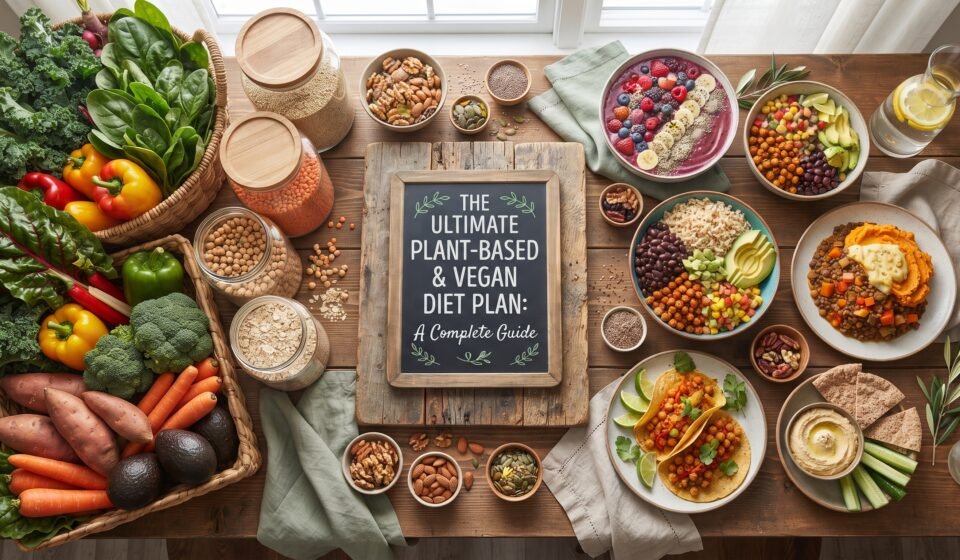
Part 3: The Ultimate Plant-Based & Vegan Master Grocery List
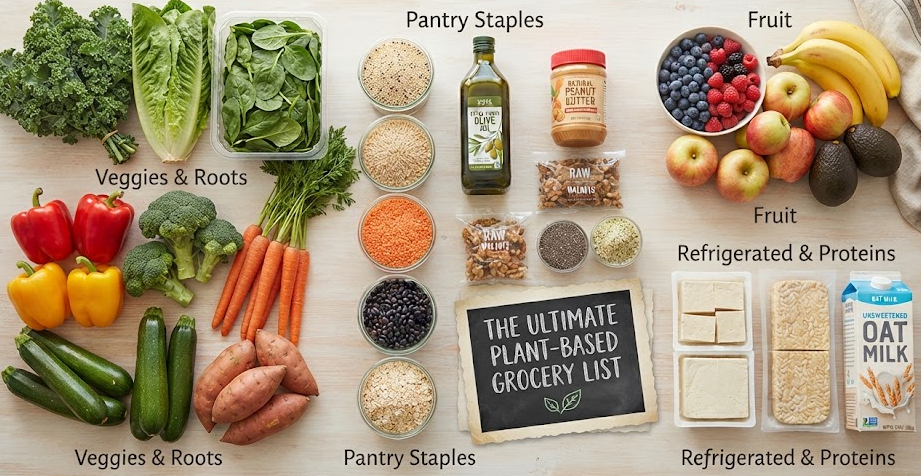
A successful transition starts with a well-stocked pantry and refrigerator. Print or save this categorized checklist for your next trip to the supermarket.
| Food Category | Essential Staple Items |
| Fresh Produce | Spinach, kale, arugula, broccoli, bell peppers, zucchini, cremini mushrooms, yellow onions, garlic, fresh ginger, lemons, limes, avocados, berries, bananas, apples |
| Starchy Vegetables & Tubers | Sweet potatoes, Japanese yams, russet potatoes, butternut squash, corn |
| Whole Grains & Complex Carbs | Rolled oats, quinoa, brown rice, farro, whole-wheat or chickpea-based pasta, sprouted grain bread |
| Legumes & Plant Proteins | Canned black beans, chickpeas, kidney beans, brown/green lentils, firm organic tofu, tempeh, frozen edamame |
| Nuts, Seeds & Healthy Fats | Raw almonds, walnuts, chia seeds, ground flaxseeds, hemp hearts, pumpkin seeds, natural peanut butter or almond butter, extra-virgin olive oil, avocado oil |
| Pantry Flavor Boosters | Low-sodium vegetable broth, crushed canned tomatoes, tomato paste, low-sodium tamari or soy sauce, nutritional yeast, maple syrup, balsamic vinegar, Dijon mustard, spices (cumin, smoked paprika, turmeric, garlic powder) |
| Refrigerated Alternatives | Unsweetened soy milk or pea protein milk, plain dairy-free yogurt |
Part 4: Comprehensive 7-Day Plant-Based Meal Plan
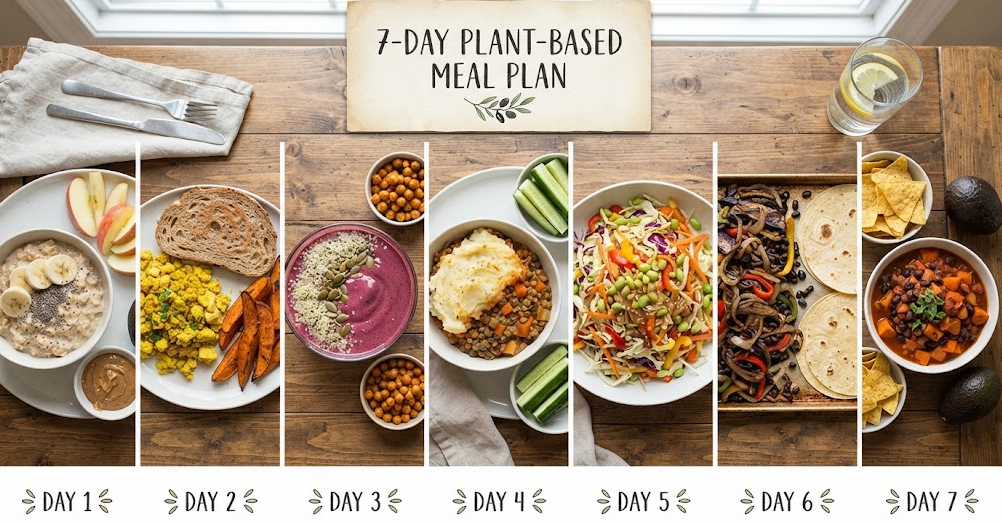
To take the guesswork out of daily cooking, this structured 7-day meal plan demonstrates how diverse, filling, and flavorful plant-based eating can be.
Day 1
- Breakfast: Peanut butter banana overnight oats made with protein-rich soy milk, chia seeds, and a dash of cinnamon.
- Lunch: Mediterranean grain bowl featuring quinoa, diced cucumbers, cherry tomatoes, chickpeas, kalamata olives, and a bright lemon-tahini dressing.
- Dinner: Hearty brown lentil and vegetable shepherd’s pie topped with a creamy dairy-free garlic mashed potato crust.
- Snack: Crisp apple slices paired with raw almond butter.
Day 2
- Breakfast: Savory turmeric tofu scramble sautéed with bell peppers, baby spinach, and onions, served with whole-wheat sourdough toast.
- Lunch: Black bean and roasted sweet potato wrap with shredded romaine lettuce, fresh pico de gallo, and guacamole.
- Dinner: Creamy coconut chickpea and spinach curry served over steaming brown basmati rice.
- Snack: Roasted crunchy chickpeas seasoned with sea salt and smoked paprika.
Day 3
- Breakfast: Antioxidant berry smoothie bowl blended with frozen mixed berries, half a banana, plant-based protein powder, and almond milk, topped with hemp hearts and pumpkin seeds.
- Lunch: Vibrant edamame crunch salad with shredded purple cabbage, shredded carrots, sliced bell peppers, and a savory ginger-peanut dressing.
- Dinner: Sheet-pan roasted portobello mushroom fajitas with charred bell peppers, red onions, black beans, and warm corn tortillas.
- Snack: A handful of mixed raw walnuts and almonds.
Day 4
- Breakfast: Warm bowl of steel-cut oats cooked with diced apples, chopped walnuts, flaxseeds, and maple syrup.
- Lunch: Hearty minestrone soup loaded with kidney beans, diced tomatoes, carrots, celery, green beans, and small shell pasta.
- Dinner: Crispy baked tofu cubes tossed in a sweet chili-tamari glaze, served alongside roasted broccoli florets and jasmine rice.
- Snack: Rice cakes topped with mashed avocado and everything bagel seasoning.
Day 5
- Breakfast: Chia seed pudding layered with coconut milk, vanilla extract, and topped with fresh raspberries.
- Lunch: Roasted Mediterranean chickpea salad stuffed inside a whole-wheat pita pocket with crisp cucumbers and dairy-free garlic tzatziki.
- Dinner: Zucchini noodles and chickpea pasta tossed in a rich, homemade walnut-basil marinara sauce with nutritional yeast.
- Snack: Sliced cucumbers with hummus.
Day 6
- Breakfast: Whole-grain waffles topped with fresh sliced strawberries, blueberries, and a drizzle of pure maple syrup, served with a side of soy milk.
- Lunch: Quinoa and black bean stuffed bell peppers baked until tender and topped with chunky salsa.
- Dinner: Creamy vegan butternut squash risotto cooked with vegetable broth, shallots, garlic, and fresh sage.
- Snack: Roasted pumpkin seeds.
Day 7
- Breakfast: Breakfast burrito stuffed with scrambled tofu, black beans, sautéed peppers, hash browns, and salsa.
- Lunch: Massaged kale salad tossed with roasted sweet potato cubes, dried cranberries, pecans, and a maple-mustard vinaigrette.
- Dinner: Hearty black bean and sweet potato chili served with a slice of warm, crusty sourdough bread.
- Snack: Fresh orange slices and a small handful of cashews.
Part 5: Practical Tips for Long-Term Success
Transitioning to a plant-based lifestyle is a journey, not an overnight sprint. Follow these core strategies to build sustainable habits:
- Focus on Addition, Not Restriction: Instead of worrying about what you are removing from your plate, focus on how many vibrant colors, textures, and new ingredients you can add. Explore unfamiliar produce items or international spice blends to keep meals exciting.
- Embrace Batch Cooking: Dedicate two hours over the weekend to prep core staples. Roast a large sheet pan of mixed root vegetables, cook a big batch of quinoa or brown rice, and simmer a pot of beans or lentils. Having these prepped elements ready in your refrigerator makes throwing together weekday meals completely effortless.
- Keep Quick Backup Options: On nights when you are too tired to cook from scratch, keep freezer-friendly whole-grain pizzas, frozen edamame, canned lentil soups, or pre-made veggie burger patties on hand.
- Listen to Your Body: Pay attention to how your energy levels, digestion, and physical recovery respond to your new food choices. Adjust portion sizes and hydrate adequately to support your body’s metabolic shifts.