
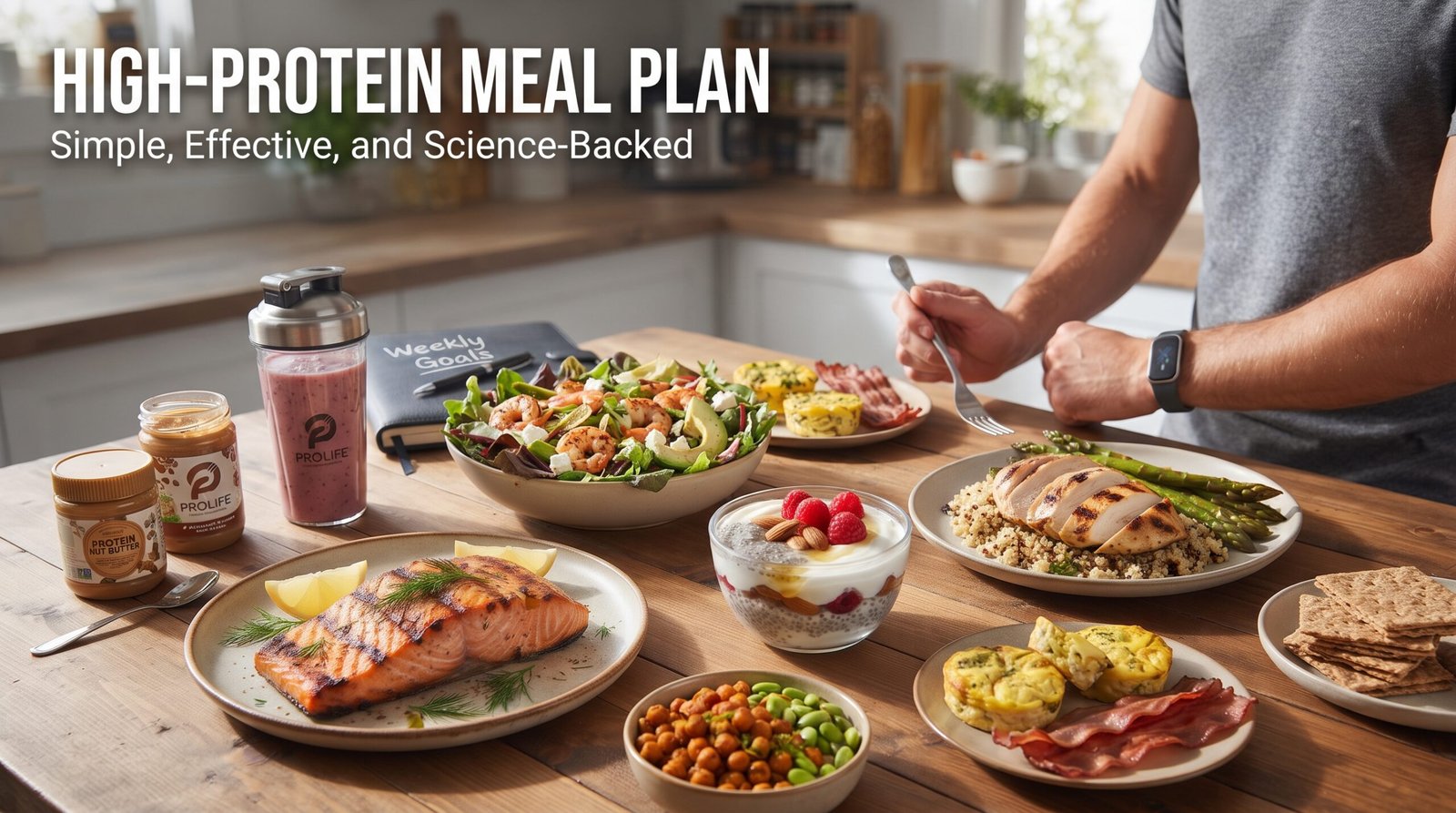
Let’s be real—losing weight, dropping stubborn body fat, and building lean muscle can feel completely frustrating when you’re constantly hungry, low on energy, or staring at results that just aren’t budging. If your days are packed with work, family, and endless to-do lists, spending hours in the kitchen meal prepping or choking down plain, dry chicken breast and steamed broccoli is a fast track to burnout.
What if there was a simpler, more satisfying way?
Studies consistently show that increasing your daily protein intake is one of the single most effective changes you can make. It helps torch fat, keeps you full for hours, and supports lean muscle retention without requiring you to completely overhaul your life.
The best part? You don’t need to sacrifice flavor or spend your entire weekend cooking. We are talking about healthy comfort foods like crispy air fryer chicken, cheesy casseroles, and protein-packed pizzas that actually taste incredible.
Whether your goal is to drop weight, gain functional strength, or simply feel better in your own skin, this ultimate guide and complete 7-day high-protein meal plan make healthy eating effortless, delicious, and sustainable. Let’s dive in!
Why This High-Protein Meal Plan Changes Everything
If you’ve ever started a diet only to give up two weeks later because you felt deprived and exhausted, you aren’t alone. Traditional diets often fail because they ignore the biological realities of hunger. This balanced, protein-packed meal plan is specifically designed to keep your blood sugar stable, your energy levels soaring, and your cravings quiet.
Here is why this approach works when others fail:
- Crushes Cravings and Keeps You Full: Protein triggers the release of satiety hormones (like PYY and GLP-1) while suppressing hunger hormones like ghrelin. This means you naturally feel fuller for longer without white-knuckling your way through cravings.
- Boosts Metabolism and Fat Burn: Protein has a high thermic effect of food (TEF). Your body actually burns about 20% to 30% of the calories consumed from protein just during the process of digesting and metabolizing it.
- Protects and Builds Lean Muscle: When you drop calories to lose weight, your body often burns muscle alongside fat. A high-protein intake signals your body to hold onto hard-earned muscle while targeting stubborn fat stores.
- Nutrient-Dense and Balanced: This plan doesn’t just focus on protein; it incorporates fiber-rich vegetables, heart-healthy fats, and complex carbohydrates to support overall wellness, gut health, and hormonal balance.
- Incredibly Diverse and Flexible: Forget rigid meal structures. This plan features delicious options that fit seamlessly into busy lifestyles, whether you prefer quick one-pan meals, wraps, or comforting casseroles.
- Healthy Comfort Foods Included: Who says healthy eating has to be boring? You can enjoy satisfying, macro-friendly comfort meals that make you forget you’re even on a plan.
The Science of Satiety: How Much Protein Do You Actually Need?
According to Harvard Medical School, your daily protein requirements depend heavily on your body weight, activity level, and personal health goals.
The baseline recommended dietary allowance (RDA) for the average sedentary adult is about 0.8 grams of protein per kilogram of body weight (or roughly 0.36 grams per pound). For example, if you weigh 150 lbs (68 kg), that baseline is a modest 55 grams daily.
However, if you are active, trying to lose fat, or building muscle, that baseline is far too low. To optimize muscle protein synthesis and keep your metabolism firing, research suggests aiming higher:
- For Active Adults & Muscle Maintenance: Aim for 0.8 to 1.0 grams per pound of body weight daily.
- Per-Meal Optimization: Aim for 20 to 30 grams of protein per meal to maximally stimulate muscle protein synthesis.
- The Upper Limit Rule: While protein is fantastic, research shows that consuming more than 40 grams of protein in a single sitting doesn’t provide additional muscle-building benefits—so spreading your protein evenly across your meals throughout the day is the ultimate strategy.
What Foods Pack the Highest Protein Punch?
Stocking your kitchen with the right ingredients is half the battle. Here is a curated guide to the top, nutrient-dense protein sources to keep on hand:
Lean Meats & Poultry
- Chicken Breast: A versatile kitchen staple; a 100-gram serving delivers approximately 22.5 grams of high-quality, lean protein.
- Turkey Breast: Lean and incredibly satisfying, cooked turkey breast offers about 25.6 grams of protein per 85-gram serving.
- Lean Beef & Pork: Excellent sources of iron, zinc, and B vitamins alongside high-quality protein.
Fish & Seafood
- Salmon: Not only does a single fillet (178 grams) pack around 39.3 grams of protein, but it also provides an abundance of anti-inflammatory omega-3 fatty acids.
- Tuna: A quick, budget-friendly pantry staple where a single can (107 grams) provides about 20.3 grams of protein.
- Shrimp & White Fish: Ultra-lean protein options that cook in minutes.
Dairy & Plant-Based Powerhouses
- Greek Yogurt: Thick, creamy, and versatile, packing approximately 10 grams of protein per 100-gram serving.
- Cottage Cheese: Low-fat cottage cheese offers about 11 grams of protein per 100 grams and can be blended into sauces or eaten with fruit.
- Eggs & Egg Whites: The gold standard for biological value, perfect for quick scrambles, bites, or meal prep.
- Legumes, Tofu, & Tempeh: Fantastic plant-based alternatives that provide fiber, minerals, and sustained energy.
The Complete 7-Day High-Protein Meal Plan
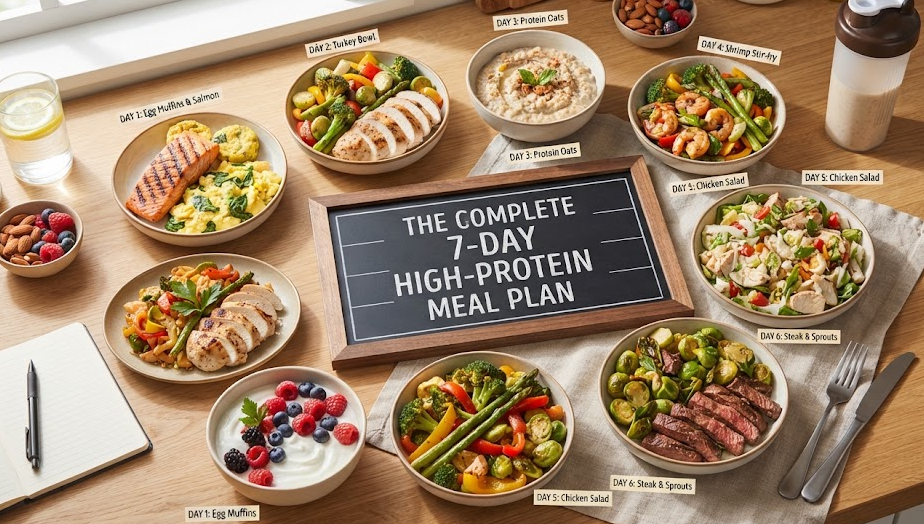
This practical, delicious 7-day meal plan is designed for busy schedules, featuring quick assembly, high-protein macros, and zero starvation.
Day 1: Kickoff Monday
- Breakfast: Protein-Packed Egg & Spinach Muffins (3 eggs whisked with a splash of milk, diced bell peppers, spinach, and feta cheese, baked in a muffin tin). Approx. 24g protein.
- Lunch: Mason Jar Mediterranean Chicken Salad (Grilled chicken breast over mixed greens, cucumbers, cherry tomatoes, olives, feta, and a light lemon-herb dressing). Approx. 35g protein.
- Snack: Greek Yogurt Berry Bowl (1 cup plain Greek yogurt topped with a handful of fresh blueberries and a tablespoon of chia seeds). Approx. 22g protein.
- Dinner: Air Fryer Garlic Butter Salmon with Asparagus (Salmon fillet air-fried with garlic, lemon, and olive oil, served alongside roasted asparagus and quinoa). Approx. 42g protein.
Day 2: Energized Tuesday
- Breakfast: Cottage Cheese Power Bowl (1 cup low-fat cottage cheese topped with sliced strawberries, chopped walnuts, and a drizzle of honey). Approx. 28g protein.
- Lunch: Turkey and Avocado Lettuce Wraps (Sliced deli turkey breast or ground turkey seasoned with taco spices, wrapped in crisp romaine lettuce leaves with a dollop of Greek yogurt guacamole). Approx. 32g protein.
- Snack: Hard-Boiled Eggs & Almonds (2 hard-boiled eggs with a pinch of sea salt and a small handful of raw almonds). Approx. 15g protein.
- Dinner: High-Protein Air Fryer Chicken Thighs & Roasted Sweet Potatoes (Boneless, skinless chicken thighs seasoned with paprika, garlic powder, and herbs, air-fried to crispy perfection, paired with cubed sweet potatoes and broccoli). Approx. 45g protein.
Day 3: Balanced Wednesday
- Breakfast: Protein Peanut Butter Oatmeal (1/2 cup rolled oats cooked with almond milk, stirred with 1 scoop of vanilla protein powder and 1 tablespoon of natural peanut butter). Approx. 26g protein.
- Lunch: Quick Tuna & White Bean Salad (1 can of drained tuna mixed with cannellini beans, diced red onion, celery, lemon juice, and olive oil over arugula). Approx. 38g protein.
- Snack: Sliced Apple with Greek Yogurt Peanut Butter Dip (1/4 cup Greek yogurt mixed with 1 tbsp peanut butter). Approx. 10g protein.
- Dinner: Lean Turkey Meatball Zucchini Noodles (Homemade lean turkey meatballs simmered in marinara sauce, served over spiralized zucchini noodles topped with grated parmesan). Approx. 40g protein.
Day 4: Thriving Thursday
- Breakfast: Savory Scrambled Eggs with Turkey Bacon (3 scrambled eggs cooked with a handful of spinach and mushrooms, served with 2 slices of crispy turkey bacon). Approx. 27g protein.
- Lunch: Leftover Turkey Meatballs & Zucchini Noodles (Quick and easy repeat lunch that tastes even better the next day). Approx. 40g protein.
- Snack: Protein Shake (1 scoop whey or plant protein powder blended with unsweetened almond milk, ice, and half a frozen banana). Approx. 25g protein.
- Dinner: Sheet Pan Lemon Herb Shrimp and Veggies (Large shrimp tossed in olive oil, garlic, and herbs, roasted on a sheet pan alongside bell peppers, zucchini, and cherry tomatoes). Approx. 38g protein.
Day 5: Friday Focus
- Breakfast: Greek Yogurt Parfait (Greek yogurt layered with high-protein granola and mixed berries). Approx. 22g protein.
- Lunch: Grilled Chicken & Quinoa Salad Bowl (Sliced grilled chicken breast over cooked quinoa, black beans, corn, salsa, and a lime-cilantro dressing). Approx. 40g protein.
- Snack: Edamame Pods (1 cup steamed edamame sprinkled with sea salt). Approx. 18g protein.
- Dinner: High-Protein Air Fryer Pizza Dogs (Whole wheat or high-fiber hot dog buns stuffed with lean turkey hot dogs, marinara sauce, turkey pepperoni, and melted part-skim mozzarella, air-fried until bubbly and golden). Approx. 35g protein.
Day 6: Saturation Saturday
- Breakfast: High-Protein Flourless Pancakes (2 mashed bananas, 2 eggs, and 1 scoop of protein powder blended and cooked on a griddle, served with sugar-free syrup). Approx. 24g protein.
- Lunch: Healthy Chicken Salad Stuffed Avocado (Diced grilled chicken mixed with Greek yogurt, celery, and dijon mustard, stuffed into the halves of a fresh avocado). Approx. 34g protein.
- Snack: Cottage Cheese and Cucumber Slices (Cottage cheese seasoned with black pepper and dill, served over crisp cucumber rounds). Approx. 14g protein.
- Dinner: Lean Steak Strips with Roasted Brussels Sprouts (Flank steak or sirloin steak pan-seared to preference, sliced thin, and served with a generous side of crispy garlic-roasted Brussels sprouts). Approx. 46g protein.
Day 7: Reset Sunday
- Breakfast: Veggie Omelet with Goat Cheese (3-egg omelet packed with mushrooms, bell peppers, spinach, and a crumble of tangy goat cheese). Approx. 22g protein.
- Lunch: Chickpea and Tuna Quinoa Bowl (Canned tuna and chickpeas tossed with diced cucumbers, tomatoes, olive oil, and lemon juice). Approx. 36g protein.
- Snack: Beef Jerky or Turkey Jerky (1 oz of high-quality, low-sugar beef or turkey jerky). Approx. 12g protein.
- Dinner: Baked Lemon Garlic Cod with Broccoli Florets (Fresh cod fillets baked with butter or olive oil, garlic, and lemon slices, served alongside steamed broccoli and wild rice). Approx. 35g protein.
Pro Tips to Master Your High-Protein Lifestyle
Adopting a high-protein routine doesn’t have to feel overwhelming. Keep these foundational habits in mind to stay consistent:
- Batch Prep Your Proteins: Grill a large batch of chicken breasts, boil a dozen eggs, or bake a tray of turkey meatballs on Sunday. Having ready-to-eat proteins in your fridge makes throwing together quick meals effortless during busy weekdays.
- Prioritize Protein First: When building your plate at lunch or dinner, put your protein source down first, then build your vegetables and complex carbohydrates around it.
- Hydrate Adequately: A higher protein intake places extra processing demands on your system. Drinking plenty of water throughout the day supports proper digestion, nutrient transport, and overall kidney function.
- Listen to Your Body: Pay attention to your energy levels, digestion, and hunger cues. Fine-tune your portions as needed to match your daily activity and lifestyle demands.
The Future of Healthy Eating: Exciting New Frontiers
The world of nutrition is constantly evolving. Beyond traditional chicken, fish, and dairy, researchers and food innovators are exploring exciting sustainable alternatives. For instance, recent studies suggest that alternative proteins—including sustainably sourced plant proteins and even nutrient-dense insect protein derivatives—are emerging as viable, highly sustainable options that support bone growth, development, and overall ecological health. While you don’t have to jump straight into alternative proteins, keeping an open mind to diverse nutrient sources ensures your diet remains resilient, varied, and forward-thinking.
By following these simple steps, leveraging smart meal prep, and enjoying delicious, protein-packed comfort foods, you can completely transform your health, crush your fitness goals, and make healthy eating an effortless part of your daily routine.